 Great to see survivors striking back
Friday, June 23, 2006


Tuesday, June 06, 2006
Church denial of truth over abuse must end
| |
The most obdurate of the religious congregations which managed residential institutions for children will appear before the investigation committee of the Commission to Inquire into Child Abuse today. They, the Oblates of Mary Immaculate in Ireland, managed St Conleth's reformatory at Daingean in Co Offaly and Scoil Mhuire in Lusk, Co Dublin. A total of 322 abuse complaints have been made by former residents of both.
Appearing before the committee in May 2005, the congregation's Fr Michael Hughes strongly rejected allegations of serious sexual and physical abuse at Daingean. Concerning allegations of sexual abuse by staff there, he said "immoral, impure conduct", strictly forbidden at the reformatory, "was a problem among the boys".
And on physical abuse? "The punishment was very, very severe, but I feel it would be an injustice to the men of the time to say it was abuse," he said. No punishment books - required by law - had survived from there.
He didn't know why.
He was aware of concerns expressed by members of the Kennedy Committee, which inspected Daingean in 1968, at the administration of corporal punishment to boys' bare buttocks and that the then resident manager Fr McGonagle appeared to accept the value of such punishment as "more humiliating".
Fr McGonagle, he said, had denied acknowledging the added value of such humiliation, though he did not deny boys so punished were naked with their shirts pulled up. Fr Hughes accepted as "an honest statement of what was observed" a 1966 report which said corporal punishment at Daingean was "used frequently. When it is used it is very severe and in my opinion cannot in any circumstances be justified".
He disputed complaints that the boys were not fed properly and disagreed with an internal Department of Education memo which said there was "shameful neglect" of the boys' education and that they were being made use of as labourers.
He disputed findings by the Kennedy Committee on Daingean that the boys were "dirty and unkempt", that showers at Daingean were "rusted and disintegrating" through lack of use, and that toilets were "dirty and unsanitary". He contrasted those Kennedy findings with a "very careful" 1966 report from a Dr Lysaght.
He disagreed with Justice Seán Ryan, chairman of the committee, that it seemed "eccentric" to accept the findings of one report and reject those of the other.
The hearing was also told six Oblate Brothers at Daingean had nervous breakdowns between 1964 and 1969. Fr Hughes agreed men under such stress "might snap and become abusive", though he felt they "were [ now] being treated very unfairly".
Fr Hughes blamed the shortcomings at Daingean on the poor level of State funding. Yet in 1955, after a visit there, the secretary of the Department of Education described Daingean as "Dickensian" and said conditions in which its cows were kept were considerably better than those for the boys. He added: "I am of the opinion that very handsome profits are made on the farm, but I can see no evidence of any of the profits being ploughed back for the benefit of the boys."
You might say, in light of so much documented and objective evidence, that Fr Hughes is somewhat deluded where Daingean is concerned. That is for the commission to decide. But, if so, Fr Hughes is not unique.
Where some bishops, priests and many among the "our-church-right-or-wrong" brigade are concerned there is a similar tendency. For example, they have been using one statistic from the Savi Report (Sexual Abuse and Violence in Ireland), published in 2002 by the Dublin Rape Crisis Centre, with unseemly regularity for the last four years.
As recently as May 27th, Breda O'Brien trotted it out on these pages in criticism of Vincent Browne. "He is aware that only 3 per cent of sexual abuse is carried out by religious or clergy. Yet how many programmes have focused on the other 97 per cent?" she asked.
That "3 per cent" is in fact 3.2 per cent. The same Savi Report found that 2.5 per cent of abuse was by fathers.
It means that religious or clergy (ie, diocesan priests, priests in religious congregations, and brothers) as a social cohort are more than 1.25 times more likely to abuse than biological fathers.
Indeed, from what is known, there is little to suggest any other relevant social cohort - teachers, social or care workers - reach such levels when it comes to abuse. Ignorance of this, wilful or otherwise, should not be indulged anymore, particularly following the welcome decision by Pope Benedict last month that the founder of the Legionaries of Christ, Fr Marciel Maciel Degollado, be restricted in ministry on foot of allegations of sex abuse spanning decades.
It set a new example where Rome is concerned.
When that decision was announced the legionaries and their lay Regnum Christi movement issued an extraordinary statement.
It said that, following the Pope's decision, Fr Maciel had "declared his innocence and, following the example of Jesus Christ, decided not to defend himself in any way". The comparison is odious, perhaps blasphemous.
Delusion hardly comes greater, but in this instance it has been challenged, at last. While some senior figures in the Catholic Church here have shown commendable leadership on this issue it is about time that others, and their apologists, did so too. It is time they followed the example of Pope Benedict, acknowledged the elephant in the sacristy, and dealt with it.
© The Irish Times
Monday, June 05, 2006
My Blood on the Daisies

In St. Patrick's in Kilkenny there was a game a nun used to play using a hurley stick and a sliothar. Sometimes us children were allowed to play in a green area, called the Parade, at the back of the Institution. The Parade contained swings, climbing frames, a see-saw, and benches; and woe betide any child who dared to use these. Mostly we played in the grass making chains from the daisies or clover flowers that fairly carpeted the Parade, some sat on the benches. I liked to sit on one of the concrete posts attached to the climbing frame and pretend I was driving a tractor - I always faced my "tractor" away from the Institution and I "drove" like mad to get away over the fields and to whatever lay beyond.
Anyway this nun used to hit the sliothar up the Parade and boys would chase after it and whoever got it and brought it back to the nun would get a "treat" in the shape of one of those Nice biscuits with the sprinkling of sugar on one side of it. I never took part in this game mainly because I was much younger and smaller than those boys who did take part.
When it was time to line up in our group I got down from my "tractor" and ran towards my group. The nun with the hurley then noticed my knees were dirty. One thing these nuns could NOT abide was DIRT and she started to punch me with the hand holding the sliothar - I was rigid with shock and fright, but to the nun I was obviously being sullen. She began to whack me across the legs with the hurley stick.
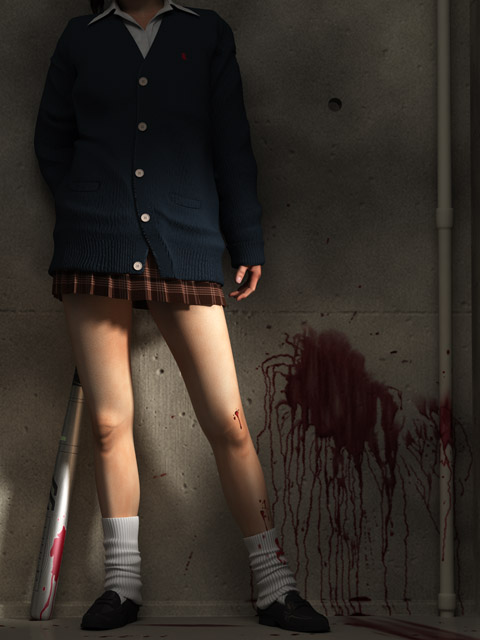
Such was the force of these blows that I fell onto the grass and blood spurted from my knee and covered a clump of daisies. In panic I ran from the Parade and ended up in the only sanctuary us boys had in St. Patrick's: the toilets. I went into a cubicle and sat down but more blood gushed out and I began to feel the pain in my bloodied knee and I went towards one of the exits doors. There was a trail of blood in the toilets where I had run around in panic. On the door, about head height, there was a reflective protection panel and in the reflection I could see the face of an ashen faced boy with tears rolling down his face - and very very sad eyes. I wished then I could help that boy but I couldn't. The next thing I remember is lying in bed in the dormitory and my left knee was throbbing and heavily bandaged. How long I was in that bed I don't know but soon another boy was put into the bed next to me. His leg was in plaster. Over the next (I really don't know how long) weeks I had to teach this boy the responses to the Latin mass - each day a nun would come into the dormitory and quiz him and if he failed her test I was deprived of my dinner: some green substance with carrots ot greasy cabbage added. And I did go hungry for a while - but really we were ALWAYS hungry in ....those Places.
So when Sister Una O'Neill replies to a specific allegation that a former resident saw another child being beaten "with an instrument" [ a hurley stick] : "...she accept[s] that it was what was in the memory of the man who made the allegation .... but that the sisters had no memory of it."
Let me say to her: "I've never forgotten the eyes of that little child reflected back at me in the toilets; That was actually the FIRST EVER time that I saw what I looked like. I hold the memory of teaching Latin mass responses to a boy with a broken leg deep within me - and each time I see daisies I see blood spatters on them."
So don't fucking patronise me Sister Una, you had your fucking chance to challenge me when I sat in the witness box for over an hour and gave my sworn testimony -each time the Judges went back to your legal team and offered you the chance to question me and EACH FUCKING TIME you declined to ask me any questions.
Is it strange (or instructive) the things you remember of CERTAIN incidents from such a childhood?
Anyway this nun used to hit the sliothar up the Parade and boys would chase after it and whoever got it and brought it back to the nun would get a "treat" in the shape of one of those Nice biscuits with the sprinkling of sugar on one side of it. I never took part in this game mainly because I was much younger and smaller than those boys who did take part.
When it was time to line up in our group I got down from my "tractor" and ran towards my group. The nun with the hurley then noticed my knees were dirty. One thing these nuns could NOT abide was DIRT and she started to punch me with the hand holding the sliothar - I was rigid with shock and fright, but to the nun I was obviously being sullen. She began to whack me across the legs with the hurley stick.
Such was the force of these blows that I fell onto the grass and blood spurted from my knee and covered a clump of daisies. In panic I ran from the Parade and ended up in the only sanctuary us boys had in St. Patrick's: the toilets. I went into a cubicle and sat down but more blood gushed out and I began to feel the pain in my bloodied knee and I went towards one of the exits doors. There was a trail of blood in the toilets where I had run around in panic. On the door, about head height, there was a reflective protection panel and in the reflection I could see the face of an ashen faced boy with tears rolling down his face - and very very sad eyes. I wished then I could help that boy but I couldn't. The next thing I remember is lying in bed in the dormitory and my left knee was throbbing and heavily bandaged. How long I was in that bed I don't know but soon another boy was put into the bed next to me. His leg was in plaster. Over the next (I really don't know how long) weeks I had to teach this boy the responses to the Latin mass - each day a nun would come into the dormitory and quiz him and if he failed her test I was deprived of my dinner: some green substance with carrots ot greasy cabbage added. And I did go hungry for a while - but really we were ALWAYS hungry in ....those Places.
So when Sister Una O'Neill replies to a specific allegation that a former resident saw another child being beaten "with an instrument" [ a hurley stick] : "...she accept[s] that it was what was in the memory of the man who made the allegation .... but that the sisters had no memory of it."
Let me say to her: "I've never forgotten the eyes of that little child reflected back at me in the toilets; That was actually the FIRST EVER time that I saw what I looked like. I hold the memory of teaching Latin mass responses to a boy with a broken leg deep within me - and each time I see daisies I see blood spatters on them."
So don't fucking patronise me Sister Una, you had your fucking chance to challenge me when I sat in the witness box for over an hour and gave my sworn testimony -each time the Judges went back to your legal team and offered you the chance to question me and EACH FUCKING TIME you declined to ask me any questions.
Is it strange (or instructive) the things you remember of CERTAIN incidents from such a childhood?
MINUTE AND EXACT DETAILS

The sisters of charity had TWO nuns employed FULL-TIME filling in the PUNISHMENT BOOKS.
This Book had a big E&OE stamp on it's wine-coloured cover. It was stated at the commission this week that if a child wet his bed he was made to stand by his bed for 4 or 10 minutes, then he was slapped and he had to carry his own sheets down to the laundry. In a dormitory of with 100 boys no child is going to wait 5 or 10 minutes for his punishment - what actually happened was that we were lined up in single file against the wall in the dormitory and one-by-one we were taken into the nuns cubicle where our trousers were taken down and we were lashed with with a stick (sister beard) or lashed with a leather strap (sister moustache). Us children waiting in line for this PUNISHMENT were terrified and formed huddles where we tried to comfort each other - in this way we gave each other strength and courage; and our biggest fear here was that we would cry, NOT that we were going to get hit (being hit was a regular occurence) or that there was going to be pain (pain was a constant) - THAT was our fear - Crying was a NO-NO. After being hit we then had to take our sheets to the laundry where we had to load the sheets into the drum. Then we had to scoot along to our first helping of bread and dripping but, because we had being in the PUNISHMENT LINE in the dormitory, we had missed this and so we were put into the PUNISHMENT LINE in the refectory where the CYCLE OF PUNISHMENT continued. Hungry and beaten we scooted then to our "classrooms" and because we were late we were placed in the PUNISHMENT LINE and at the end of "lesson" we were caned.
So when we hear of the phrase PUNISHMENT BOOK think PLURAL. The sisters of charity and the christian are NOT missing A PUNISHMENT BOOK, they are BEREFET OF PUNISHMENT BOOKS - SEVERAL VOLUMES of these E&OE BOOKS PER MONTH.
Yes I believe that SHELVES AND SHELVES AND SHELVES of these PUNISHMENT BOOKS are deliberately "missing". How these orders could attempt justify the MINUTE AND EXACT DETAILS carefully written into into these VOLUMES and at the same time claim lack of funds and lack of staff is something we will never learn because THESE BOOKS ARE MISSING.
Allegedly ..........
This Book had a big E&OE stamp on it's wine-coloured cover. It was stated at the commission this week that if a child wet his bed he was made to stand by his bed for 4 or 10 minutes, then he was slapped and he had to carry his own sheets down to the laundry. In a dormitory of with 100 boys no child is going to wait 5 or 10 minutes for his punishment - what actually happened was that we were lined up in single file against the wall in the dormitory and one-by-one we were taken into the nuns cubicle where our trousers were taken down and we were lashed with with a stick (sister beard) or lashed with a leather strap (sister moustache). Us children waiting in line for this PUNISHMENT were terrified and formed huddles where we tried to comfort each other - in this way we gave each other strength and courage; and our biggest fear here was that we would cry, NOT that we were going to get hit (being hit was a regular occurence) or that there was going to be pain (pain was a constant) - THAT was our fear - Crying was a NO-NO. After being hit we then had to take our sheets to the laundry where we had to load the sheets into the drum. Then we had to scoot along to our first helping of bread and dripping but, because we had being in the PUNISHMENT LINE in the dormitory, we had missed this and so we were put into the PUNISHMENT LINE in the refectory where the CYCLE OF PUNISHMENT continued. Hungry and beaten we scooted then to our "classrooms" and because we were late we were placed in the PUNISHMENT LINE and at the end of "lesson" we were caned.
So when we hear of the phrase PUNISHMENT BOOK think PLURAL. The sisters of charity and the christian are NOT missing A PUNISHMENT BOOK, they are BEREFET OF PUNISHMENT BOOKS - SEVERAL VOLUMES of these E&OE BOOKS PER MONTH.
Yes I believe that SHELVES AND SHELVES AND SHELVES of these PUNISHMENT BOOKS are deliberately "missing". How these orders could attempt justify the MINUTE AND EXACT DETAILS carefully written into into these VOLUMES and at the same time claim lack of funds and lack of staff is something we will never learn because THESE BOOKS ARE MISSING.
Allegedly ..........
Time to look at writing an entirely new constitution
Monday June 5th 2006 Irish Independent
SOMETHING more troubling than a statutory catastrophe was triggered when the Supreme Court struck down the 1935 law on the rape of minors. It has proved to be the catharsis for a plague of ills long festering and long ignored in Irish society.
In Leinster House last Friday, the government was brandishing a legislative palliative to sedate its own backbenchers' electoral panic as much as the people's anxiety over the legal repercussions of the court's ruling. This was a government-in-crisis, reacting on the hoof to public rage but, once again, failing to see the bigger picture. The thousands of citizens would abandon their plans and routines on a rare sunny bank holiday Friday to participate in hastily-organised protests across the country indicated something seriously rotten in the State of Ireland. What many of those people had to say should have the politicians very, very worried.
"They're more interested in the pay talks in Dublin Castle," complained one young woman who had been serially sexually abused as a child. Another accused the government of being more concerned with SSIAs than people. Somebody else thought Bertie Ahern's make-up budget could be better spent on caring for the aged.
The protesters - mostly women and children carrying white flowers of innocence - decried the deaths of children on school buses, the pension abuse of elderly care residents, the horrors visited on the sick in A&E units and the general impression that the most vulnerable sectors are meted out second-class treatment. The people who said these things looked healthy and wealthy - proper Celtic Tigers - but theirs were the voices of the dispossessed.
Was it only six or seven weeks ago that we were celebrating the proclamation of the Republic with a parade of shiny soldiers past the GPO? Those who celebrated with self-satisfaction that day ought to think again because, judging by the articulated isolation of those people last Friday, we are living less and less in a Republic. And more and more in a fool's paradise.
There have been disparate calls since the Supreme Court judgment for a referendum to insert a guarantee of child protection in the Constitution. But why stop there? Why not take the bull by the horns and review the Constitution in its entirety? Bunreacht na hEireann is the blueprint of the nation, of this supposed republic of equals. While the nation has galloped beyond the horizon of recognition in the last decade alone, the Constitution has been our Lot's wife, looking back and frozen.
We need to rescue it from the deep freeze of history for, in many parts, it no more reflects us than does Dorian Gray's picture. Ireland, like it or not, is a secular society of many religions and none but still Article 44.1 acknowledges that "the homage of public worship is due to Almighty God."
The preamble is written in the name of the "Most Holy Trinity" and the president's oath genuflects to God. The Constitution espouses paternalistic, Catholic social thinking. It is invoked to deny children at risk the right to directly access State services. It is haunted by the ghost of the X Case and asserts the traditional nuclear family as the only acceptable model even though gay partnerships are long past being curiosities. Article 41.2 (1), over which many women fled Dev's Fianna Fail in the 1930s - before the advent of the microwave and the centralised vacuum cleaner - is the handcuffs tying women to patriarchal stereotype.
In its day, the Constitution was a noble document. But, by the yardstick of modern Ireland, it reads like a hybrid of Home Rule and the 10 Commandments.
Bertie Ahern's commitment to the ethos of volunteerism appears genuine but it is never going to work as long as large numbers of apparently have-it-all citizens feel that some of us are regarded as more equal than others. Bunreacht na hEireann is our mission statement. Let's dust it down and make a re-declaration of the standards by which we want to live.
Subscribe to:
Posts (Atom)